Top 5 Reasons Your Washing Machine Isn't Draining
Standing water in your washing machine drum is one of the most frustrating appliance failures you can encounter. When a cycle ends and you are greeted by a pool of soapy, murky water, it is easy to assume the worst. However, in our years of hands-on diagnostics across all major European and Asian washing machine brands (including Bosch, Siemens, LG, Samsung, and Miele), we have found that drainage failures usually stem from a handful of common, often preventable issues.
Understanding how your washing machine removes water is key to resolving the issue. The drainage system consists of a tub-to-pump hose, a lint/pump filter, an electric impeller drain pump, and an external drain hose connected to your home plumbing. If any single component in this sequence is blocked or fails electrically, water will remain trapped in the drum.
Here are the top 5 reasons your washing machine is not draining, along with expert diagnostic steps to identify the root cause.
1. A Clogged Pump Filter (The Lint & Coin Trap)
By far the most common culprit behind drainage failure is a clogged pump filter. The pump filter is designed to protect the drain pump's impeller from foreign objects like coins, hairpins, keys, collar stays, and heavy accumulations of lint or tissue paper.
How to diagnose: Most front-loading washing machines have an access panel at the bottom right or left corner. Place a shallow tray and old towels underneath the panel, as water will rush out when you unscrew the filter. Gently twist the filter cover counterclockwise to release it. Inspect the chamber for debris. If you find coins, hair ties, or solid build-ups blocking the chamber, clean the filter thoroughly under warm water and check if the pump impeller inside the housing spins freely with a screwdriver before reinstalling.
2. A Kinked, Bent, or Pinched Drain Hose
Washing machine installations can shift over time. If your machine is pushed too close to the wall, or if it vibrates heavily during high spin speeds, the flexible corrugated plastic drain hose at the back can become kinked, flattened, or pinched against the wall or cabinets. This physically restricts or stops the flow of water.
How to diagnose: Carefully pull the washing machine out from its cabinet or wall space. Trace the entire length of the drain hose from where it exits the machine to where it enters the standpipe or under-sink siphon connection. Check for any sharp bends, twists, or places where the hose is crushed. Straighten the hose out and ensure it has a gentle, arching curve to allow unrestricted water flow.
3. A Blocked Waste Under-Sink Connection or Standpipe
Sometimes the issue is not with the washing machine itself, but with your home's wastewater plumbing. In many modern kitchens, the washing machine drain hose connects directly to a spigot under the kitchen sink siphon. If food waste, grease, or debris clogs the sink pipe, the washing machine water cannot drain and may even back up into your sink or machine.
How to diagnose: Disconnect the washing machine drain hose from the under-sink spigot. Place the end of the hose in a clean bucket and run a manual spin/drain cycle on your machine. If water pumps out powerfully into the bucket, your washing machine's internal system is working perfectly, and the blockage lies within your sink trap or wall pipes. You will need to clean the siphon trap under the sink or clear the wall plumbing.
4. A Faulty or Worn-out Drain Pump Motor
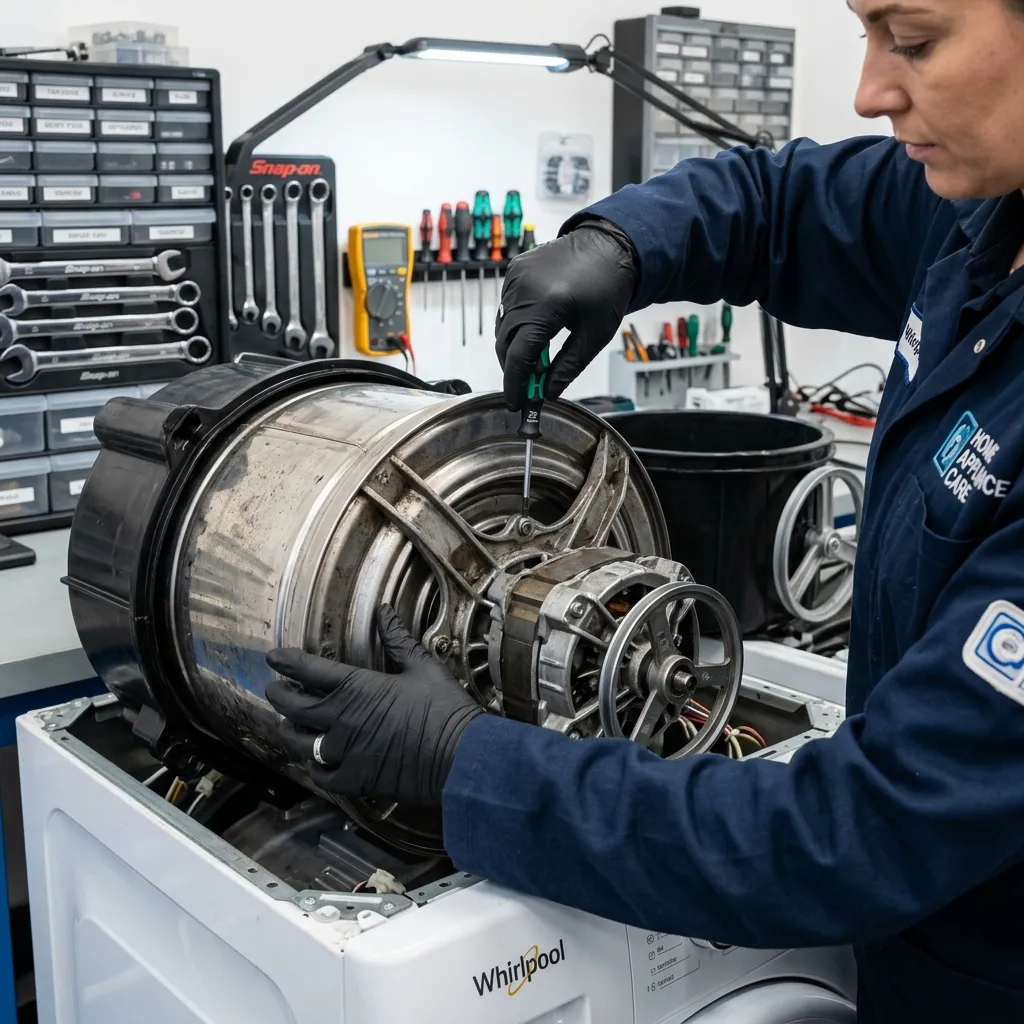
If the filter is clean and the hoses are clear, the drain pump itself may have failed. Drain pumps are small electric motors with a plastic impeller. Over years of operation, the bearings can wear down, the motor winding can burn out, or the impeller can break off from the motor shaft. When this happens, you may hear a faint humming or clicking sound when the machine tries to drain, but no water moves.
How to diagnose: Listen closely when the drain cycle begins. A healthy pump has a steady, rhythmic humming noise. A loud rattling sound suggests debris is hitting the impeller, while a quiet buzz followed by silence indicates a seized motor. A professional technician can test the pump motor's electrical continuity using a multimeter. If the resistance (ohms) reads open line (OL) or zero, the pump is dead and requires complete replacement with a high-quality replacement part.
5. An Internal Tub-to-Pump Hose Blockage
The tub-to-pump hose (often called the black corrugated accordion hose) connects the bottom of the washing machine tub directly to the pump filter housing. Sometimes, small items like socks, underwear, or washcloths slip past the drum seal and get sucked down into this internal hose, blocking water before it can even reach the filter.
How to diagnose: This requires removing the front, back, or bottom access panel of your machine, which should only be performed after disconnecting the appliance from the power mains. By squeezing the thick black rubber hose, you can feel for any hard, foreign objects trapped inside. If a blockage is suspected, the hose clamps must be loosened to detach the hose and retrieve the obstruction.
Drainage Issue Troubleshooting Guide
| Symptom | Likely Cause | Fix Difficulty | Recommended Action |
|---|---|---|---|
| Water in drum, pump hums loudly | Debris in filter chamber | Easy (DIY) | Clean the filter chamber and check impeller. |
| Water in drum, no pump sound at all | Burned out pump motor | Hard (Expert) | Replace drain pump motor. |
| Water drains slowly or stops midway | Kinked drain hose / blocked siphon | Medium | Straighten hose or clear the under-sink siphon. |
Preventive Maintenance Tips
To avoid future drainage failures, implement these simple laundry habits:
- Empty all pockets: Always check pockets for coins, tissues, hairgrips, and screws before loading clothes.
- Use mesh laundry bags: Place delicate items, small baby socks, and underwear in zippered mesh bags to prevent them from slipping past the rubber gasket.
- Clean the filter monthly: Make it a habit to unscrew and clean your pump filter every 30 to 60 days to clear lint and debris.
- Run a maintenance wash: Run an empty hot cycle (90°C) with a descaling agent once a month to dissolve accumulated grease and fabric softener residue.
If you have checked the filter and drain hose but your washing machine still refuses to drain, it is highly recommended to seek professional assistance. Modern appliances rely on electronic control boards (PCBs) that can be damaged by prolonged pump overloading, and working with standing water and live electricity carries severe safety risks.
Expert Technician
Certified Lead Technician
Our certified technicians bring years of hands-on experience dealing with all major appliance brands in Dubai. Their guides are written to help you maintain your appliances and recognize when professional help is needed.